
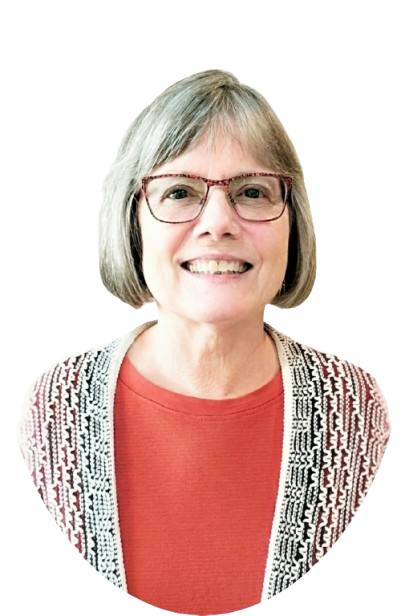
Anne McCabe is Professor Emerita of English at Saint Louis University’s Madrid Campus, where she taught rhetoric, academic writing, linguistics, public speaking, and English as an additional language. Her research focuses on Systemic Functional Linguistics and language education, with particular interest in inclusive pedagogies, multilingualism, and approaches to language teaching that value linguistic diversity and the expansion of learners’ repertoires for meaning-making. She is a member of the UAM-CLIL research group in Spain. She views language education as a means of empowerment and participation, and is especially interested in how SFL can support learners and educators whose voices and experiences have traditionally been marginalized. Her publications include the co-authored The Routledge Handbook of Transdisciplinary Systemic Functional Linguistics and A Functional Linguistic Perspective on Developing Language.
Systemic Functional Linguistics (SFL) has a long history in language education, including English Language Teaching (ELT). Historically, SFL-informed pedagogies have been associated with providing learners access to valued forms of meaning-making. At the same time, critics of both genre-based pedagogies and global ELT have argued that these approaches risk reproducing dominant linguistic and cultural norms, particularly within contexts marked by inequalities between centre and periphery (Phillipson, 1992; Luke, 1996).
This session examines the relationship between SFL and ELT through the lens of linguistic diversity. Drawing on the historical connections between British linguistics, language teaching, and the global spread of English, from J.R. Firth’s work at the School of Oriental and African Studies onwards, I trace how SFL-informed pedagogies have developed in relation to changing understandings of learner voice and educational access. Work on learner agency and forms of meaning-making on the periphery (Canagarajah, 1999, 2013) has extended these pedagogies into increasingly multilingual contexts, including recent applications linking SFL to culturally sustaining pedagogies and translanguaging (e.g. Harman, 2018). This work raises further questions about the relationship between explicit models of genre and the variability and hybridity that characterize contemporary forms of meaning-making.
SFL, as a social semiotic theory, offers rich descriptive resources for engaging with linguistic diversity. The challenge is not whether SFL can address peripheral voices, but rather how its analytical and pedagogical resources might engage with different forms of meaning-making in language education. To respond to this challenge, I consider how SFL may support access to valued discourses while recognising the legitimacy of diverse communicative practices, and how these can coexist in ways that expand opportunities for participation and agency.
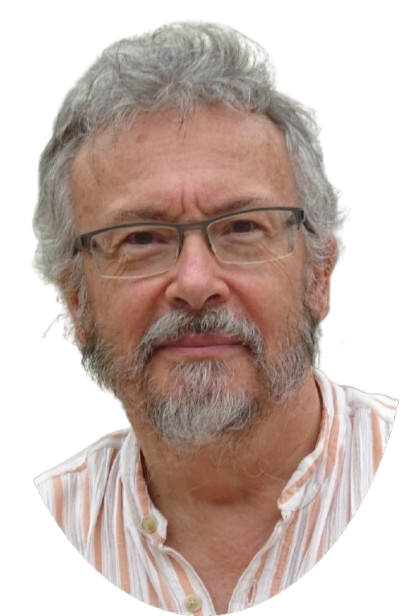
John Bateman, research professor in linguistics, Bremen University, Germany, specializes in functional and computational linguistics and multimodal semiotics. His research interests include systemic functional linguistic approaches to multilingual and multimodal document design, semiotic foundations, and theories of discourse as well as the development of robust methodologies for multimodal analysis. He studied linguistics and computer studies at Lancaster University and obtained his PhD at Edinburgh University in Artificial Intelligence within the ‘Epistemics’ postgraduate programme combining AI, linguistics, psychology, and philosophy. After working and researching on computational linguistics, multilingual and multimodal document generation, and formal ontology at the universities of Kyoto, Southern California, Saarbrücken, and Stirling and the Gesellschaft für Mathematik und Datenverarbeitung (GMD) in Darmstadt, he joined Bremen University in 1999, where his research started focusing on multimodality in earnest, ranging over film, comics, explanation videos, games, dance, diagrams, audiovisual news reporting, and more. Many publications have appeared in all these areas; a new textbook on multimodality theory and its application in description and explanation is due mid-2026.
‘Text’, and contemporary communication in general, is commonly considered to be growing increasingly multimodal due to the use of ever more diverse kinds of expressive resources. Analyses of such texts focusing on ‘just’ their verbal aspects, narrowly conceived, therefore compromise the authenticity of the very data being studied. Extending and broadening analyses beyond verbal aspects remains challenging, however. Even fairly simple multimodal configurations can leave analyses, and analysts, struggling to keep up, restricting discussions to handfuls of examples with limited possibilities for generalisation. Engaging with complex multimodal configurations is then worse still, often collapsing into little more than ‘running commentaries’. But ever more researchers are demanding more of their analyses. To support this development, I summarise in this talk some of the methodological progress that we have made over the past 10 years in developing practical approaches to analysis that are firmly grounded in an appropriately extended intrinsically multimodal functional semiotic theory. Examples from diverse media such as film, comics, advertisements, social media of various kinds, academic presentations, and more will be drawn on to suggest some of what can be done with complex data once that data has been brought under systematic control. Results from several current projects will be drawn on to emphasise the bridge that must be maintained between theory and practice at all levels and stages of work, and some suggested guidelines for going about and reporting such work most effectively will be set out as recommendations for shaping future research.
References
Bateman, John A., Wildfeuer, Janina and Hiippala, Tuomo. Multimodality: A Hands-On Guide, De Gruyter, 2026.
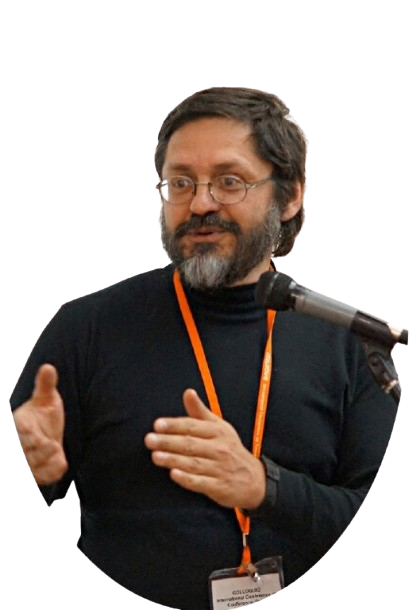
Serge Sharoff is Professor of Language Technology at the University of Leeds. Artificial Intelligence and Large Language Models have recently made a profound impact on how we interact with computers. He has been doing fundamental research in this area since his own PhD in the 1990s on a language model to describe the functional domain of asking questions. Since then, he has been involved in research across the Digital Humanities to describe how language models can be used to describe properties of texts. His research stresses the inherent multilingualism of language technology applications. With rise of LLMs, one of the important areas of his work concerns explainability of their operations to ensure that they make right predictions for the right reasons.
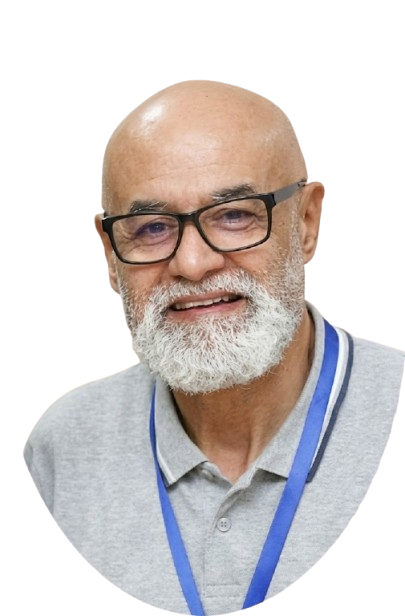
Sadok Dammak is an Associate Professor of Cultural Studies at the University of Sfax, Tunisia. He holds a doctorate and a Habilitation degree. His research focuses on cultural anthropology, with a particular interest in ethnic, intercultural, and multi-dimensional identities in US society. His latest publications in this field include “Interculturation and Ethnicity: ‘Spanglish’ as the Emergence of a Third Identity”; “Interculturality as the Outcome of Religious Cultural Encounters in the Autobiography of Malcolm X”; and The Nation of Islam Cautious Return to Americanity in the 2010s.
In U.S. society, majority/minority relations are typically investigated from the dominant group’s perspective. Responses to hegemonic attitudes have seldom been studied in terms of perceptions and have instead been examined through militant reactions. Nowadays, marginalized groups tend to shift toward less radical forms of interaction. We observe more integrative, accommodative, and deradicalized stances. Little is known about this change in sociocultural practices, which seems contingent on transforming political and religious contexts triggered by multiple cultural encounters. We therefore need interdisciplinary research approaches likely to yield new theoretical views that explain the shifting peripheral experiences. In light of current trends in cultural anthropological paradigms, this talk will examine the manifestations of sociocultural transformation arising from significant, interactive adjustments that lead to deliberate redefinitions of cultural values. It will focus on the metamorphosis of religious faith, ancestral heritage, and mother tongue into mitigated, intercultural norms, with illustrative cases primarily involving a social, religious movement, African American Muslims, an ethnic minority, Arab Americans, and a displaced population, Hispanics. It turns out that the three groups seek to
challenge prevailing assimilationism and take command of rampant acculturation by reconverting to their own cultures, respectively, through the return to Americanity, the preservation of the “Arabian Village” enclave, or the use of Spanglish.
Keywords
Deradicalization; ethnic perspectives/narratives; integration; interculturation; marginalization
Stella Neumann is a full professor of English Linguistics at RWTH Aachen University, Germany. Her research is mainly concerned with understanding how linguistic variation shapes language. Grounded in systemic functional linguistics, it draws on quantitative corpus and experimental methods to study variation across registers, varieties, languages and in translation. As a corollary of this interest, her work also has a methodological component.
Currently, she is a co-PI of the QuanTOR project concerned with the quantitative analysis of text organisation across registers and leads the BiTPro project on linguistic variation in translation and L2 writing. Recent publications include the chapter ‘Transdisciplinary Research on Language Behaviour in Situational Context’ in the Routledge Handbook on Transdisciplinary Systemic Functional Linguistics edited by Rebekah Wegener, Anne McCabe, Lise Fontaine, and Akila Sellami Baklouti.
One constitutive motif of language is variation across instances of language use as a result of a wide range of factors that influence language users’ linguistic choices. One central type of linguistic variation is introduced by variation in context of situation, captured by the concept of register. Register is a central element in the architecture of language in the form of subsystems along the cline of instantiation, which filter the possibilities of the language system. It thus represents a very suitable starting point for exploring variation in language use.
Initially configurations of meanings associated with particular contextual configurations, Halliday characterises the resulting linguistic patterns of registers as clusters of linguistic features associated statistically with situations matching specific contextual configuration. Such clusters can be investigated empirically using quantitative multivariate methods involving sets of relevant features collected from large corpora with the help of computational tools. Moreover, in order to explore the entire variation ranging from the core to more marginal instances, it is necessary to employ a methodology that grants analytical access to every single instance of language use.In this talk, I will explore empirical evidence of register variation in English in general and more specifically the characteristics responsible for the location of texts in their specific more central or more peripheral position along the overal range of variation of their respective register. To this end, I will employ an SFL-informed quantitative corpus-based approach drawing on Geometric Multivariate Analysis (GMA), a quantitative procedure developed specifically to align with theoretical assumptions about linguistic variation. The data used for these purposes stems from studies of various English corpora.
This kind of exploration does not only shed light on long-standing system-functional claims about register, but also provides insight into the specific nature of linguistic variation in terms of core and periphery of (register-specific) language use.
SYFLAT is an academic association interested in the field of Systemic Functional Linguistics (SFL), a school of linguistics founded by the British linguist M. A. K. Halliday in 1961, and then developed and applied to many other fields.